Attwoolls Advice: What Pegs Do I Need?
When it comes to setting up camp, one small but crucial piece of kit often gets overlooked – tent pegs!
While it might seem like a simple accessory, choosing the right type of peg can make all the difference to your tent or awning set-up.
In this blog, we'll explore the various types of pegs available and their ideal applications, helping you achieve a successful tent and awning pitch every time.
Metal Pegs
 Metal single-point pegs are the most versatile type of tent peg because of their simple but strong design. They are designed to be easy to use and remove, making them the most common tent pegs you will see.
The solid metal construction means they won’t easily bend or snap under pressure, and they can withstand repeated use with a mallet. They also offer perfect leverage points for peg extractors and are often supplied in two sizes, 19cm and 26cm. We recommend choosing the larger one for harder ground and the smaller one for softer ground.
We recommend - Vango Alloy Pin Peg 19cm
V-Shaped Pegs
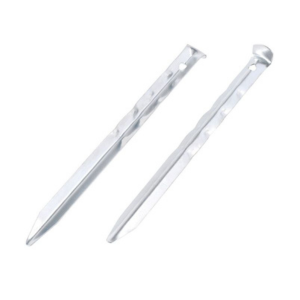 V-shaped pegs are ideal for softer camping grounds, such as sand, and for when you may be camping in wetter weather. They often have rounded edges to keep guylines from wearing out and a rippled design in the metal to provide extra grip on soft ground.
Whether you opt for plastic or metal V-shaped pegs, they are a sturdy choice as the ‘v’ shape provides extra rigidity and the flat top allows for ease of hammering into the ground. Also supplied in packs of 10, if you're heading to a beachside campsite, then we recommend choosing V-shaped pegs for your tent.
We recommend - Easy camp Ripple Pegs
Groundsheet Pegs
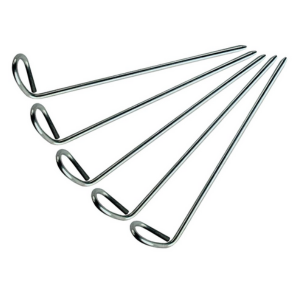 Groundsheet pegs are designed to secure your groundsheet. Typically, they have a flat head, are made from steel, and will reduce tripping and snags caused by standard pegs. The wide top allows for easy striking with a mallet, but also doubles as a loop for easy pulling with a peg extractor when departing the site.
The hardwearing steel construction will withstand the test of time. They are sold singly and in packs in our camping superstore and online.
We recommend - Vango 18cm Steel Groundsheet Pegs
Screw and Rock Pegs
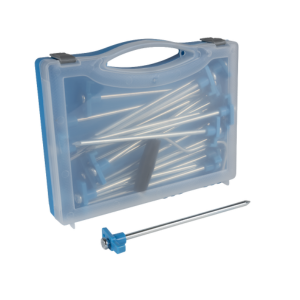 Rock pegs are designed specifically for those tough, compact, or stony pitches where standard pegs struggle. They’re usually made from thick, heavy-duty steel with a simple nail-like shape. The sharp point that can be driven into hard ground without bending.
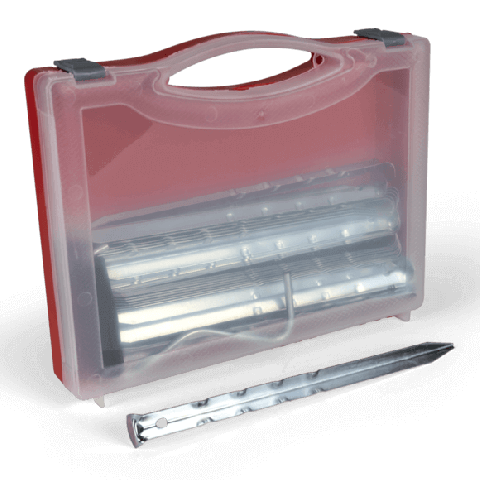
The Screw or Rock peg is ideal for campsites with gravel, rocky soil and hard-standing caravan pitches because they won’t buckle under pressure when drilled in and out of the ground. View our range in-store and online from various brands in packs of 10 with a carry case.
Plastic Pegs
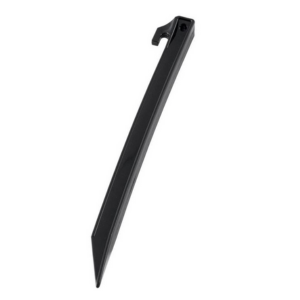 Plastic pegs are a popular choice for many campers because they’re lightweight and affordable. They’re best suited for softer ground types like grass, soil and sand. The wider profile grip means they won’t pull out as easily under pressure.
Ideal for family camping and festivals, plastic pegs are lighter to carry, don’t rust and are easy to replace if one goes missing. While they are not as tough as steel, they’re great for an everyday option for casual campers. Plastic pegs are sold individually and as sets of 6 in-store and online.
We recommend - EasyCamp 30cm Plastic Pegs
Tips for Pegging Correctly on the Campsite
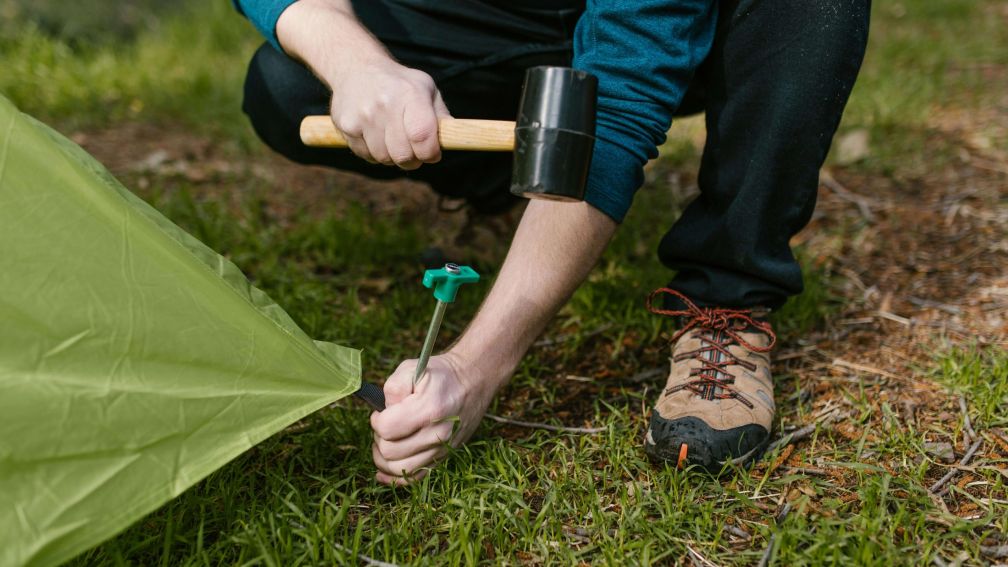
- Secure your tent correctly by pegging at a 45 degree angle
- Make sure you have the right pegs for the ground your pegging into
- Adjust the guyline tensioners as your camping conditions change
- Always bring spare pegs in case of breakages
- A Mallet and Peg Extractor are essentials for efficient pegging and removal
A final note from us
So that completes our guide on ‘What pegs do I need?.’ We hope you have found this blog helpful and can now successfully peg your tent at the campsite. For more tips and advice, check out our social channels, like YouTube, where Mike shares his latest pitching, packing and how-to videos.